Welcome to my blog! This space is a chance to share in my travels and ministry and for me to share some of my thoughts and concerns as a Franciscan and as Minister General of Society of St. Francis with you. These are reflections of a modern friar on the road. Look for prayers and other items of inspiration as they move me.
Where's Clark?
February 23—February 26, 2017
San Damiano Friary
573 Dolores Street
San Francisco, CA 94110
February 28, 2017—April 20, 2017
Province of the Solomon Islands
Patteson House
P.O. Box 519
Honiara
Solomon Islands
April 20, 2017—May 2, 2017
Province of the Divine Compassion
The Friary
P.O. Box
6134 Buranda,
Queensland 4102
May 4, 2017—May 10, 2017
Franciscans International
International Board of Directors Meeting
Assisi, Italy
May 10, 2017—May 26, 2017
Province of the Americas
St. Francis Friary
2449 Sichel Street
Los Angeles, CA 90031-2315
May 27, 2017—June 14, 2017
The European Province
Friary of St. Francis
Hilfield
Dorchester
Dorset DT2 7BE
June 14—July 1, 2017
Holiday
The Berge’s
10506 Elliott Road
Snohomish, WA 98296
July 1, 2017: end of term as Minister General
July 1, 2017—January 1, 2018
Sabbatical
Find a Franciscan near you!
Prayer
COSMIC LITANY OF THE SACRED HEART
Heart of Jesus, worthy of unending honor, alive in me.
Heart of Jesus, from the heart of Mary, alive in me.
Heart of Jesus, center of my heart, alive in me.
Heart of Jesus, desire of the everlasting hills, alive in me.
Heart of Jesus, center and joy of nature, alive in me.
Heart of Jesus, life force of the universe, alive in me.
Heart of Jesus, gate of Paradise, alive in me.
Heart of Jesus, aglow with divine love, alive in me.
Heart of Jesus, loving intent behind every twist of fate, alive in me.
Heart of Jesus, pierced to open, never to close, alive in me.
Heart of Jesus, treasury of mystical wisdom, alive in me.
Heart of Jesus, from whose fullness we all receive, alive in me.
Heart of Jesus, bountiful to all who turn to you, alive in me.
Heart of Jesus, fountain of grace and holiness, alive in me.
Heart of Jesus, source of all consolation, alive in me.
Heart of Jesus, pledge of eternal loving-kindness, alive in me.
Heart of Jesus, mercy upon mercy, alive in me.
Heart of Jesus, source of all compassion, alive in me.
Heart of Jesus, freedom from all fear, alive in me.
Heart of Jesus, full of generosity and healing, alive in me.
Heart of Jesus, my life, my death, my resurrection, alive in me.
Heart of Jesus, unfailing grace to those who live in you, alive in me.
Heart of Jesus, unending hope to those who die in you, alive in me.
Heart of Jesus, in whom there is only Yes, alive in me.
From: David Richo: The Sacred Heart of the World: Restoring Mystical Devotion to Our Spiritual Life (Paulist Press)
My Book

Available on Amazon
About Me
- Brother Clark
- I am the Minister General of the Society of St. Francis, a religious order for men in the Anglican Communion. I am an Episcopal priest and have lived, for the past 10 years in Mt. Sinai, Long Island, New York (www.s-s-f.org). Currently I spend nearly 10 months of the year traveling among the provinces of the Society of St. Francis
Something Old, Something New
The monks of the order of the Holy Cross at Mariya uMama weThemba Monastery in Grahamstown, SA, use a wonderful version of the Salve Regina:
Mary we hail you, Mother and Queen compassionate: Mary most holy, great and pure, we hail you. To you your children, members of Christ lift our voices. To you we sing praises that by your obedience you brought forth to us a Savior. Pray for us now, O our intercessor, that the grace of earnest repentance be given to us sinners. And may we, when our earthly sojourn has been ended, joy in Jesus, the blessed fruit of your womb, O gentle, O tender, O gracious Virgin Mary.
Mary we hail you, Mother and Queen compassionate: Mary most holy, great and pure, we hail you. To you your children, members of Christ lift our voices. To you we sing praises that by your obedience you brought forth to us a Savior. Pray for us now, O our intercessor, that the grace of earnest repentance be given to us sinners. And may we, when our earthly sojourn has been ended, joy in Jesus, the blessed fruit of your womb, O gentle, O tender, O gracious Virgin Mary.
Do It Anyway Prayer
1. The version found written on the wall in Mother Teresa's home for children in Calcutta:
People are often unreasonable, irrational, and self-centered. Forgive them anyway.
If you are kind, people may accuse you of selfish, ulterior motives. Be kind anyway.
If you are successful, you will win some unfaithful friends and some genuine enemies. Succeed anyway.
If you are honest and sincere people may deceive you. Be honest and sincere anyway.
What you spend years creating, others could destroy overnight. Create anyway.
If you find serenity and happiness, some may be jealous. Be happy anyway.
The good you do today, will often be forgotten. Do good anyway.
Give the best you have, and it will never be enough. Give your best anyway.
In the final analysis, it is between you and God. It was never between you and them anyway.
-this version is credited to Mother Teresa
Clark Kae Kae
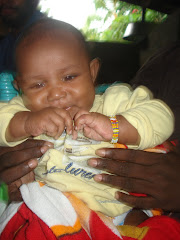
Isn't he adorable? Named after me
Subjects for Prayer
My God, if it is true that you are everywhere
why am I so often elsewhere in my thoughts?
If you travel around the world, you will find traces of God;
if you go into your own depths, you will find God himself.
Bose Monastery Welcome leaflet
why am I so often elsewhere in my thoughts?
If you travel around the world, you will find traces of God;
if you go into your own depths, you will find God himself.
Bose Monastery Welcome leaflet
A Table Prayer
For food in a world
where many walk in hunger,
For faith in a world
where many walk in fear,
For fellowship in a world
where many walk alone
We give you thanks, O Lord!
where many walk in hunger,
For faith in a world
where many walk in fear,
For fellowship in a world
where many walk alone
We give you thanks, O Lord!
A Prayer from Taize
Christ Jesus, within us there is a silent longing. And when our inner being becomes dispersed, our thirsty heart dares to say: enable me to live from you, O Christ; gather up my desire and my thirst.
Pray for Peace
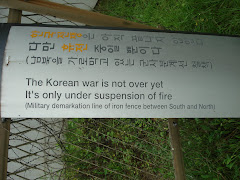
A Sign near the DMZ in Korea
A 14th Century Invitation
Come, come again, and again...
Come, be you unbeliever, idolator or fire-worshiper...
Our hearth is not the threshold of despair;
Even if you have broken your vow of repentance a hundred times,
come again
Come, be you unbeliever, idolator or fire-worshiper...
Our hearth is not the threshold of despair;
Even if you have broken your vow of repentance a hundred times,
come again
As seen on the London Underground
From The Prelude by William Wordsworth
Now free,
Free as a bird to settle where I will
What dwelling shall receive me? In what vale
Shall be my harbor? Underneath what grove
Shall I take up my home? And what clear stream
Shall with its murmur lull me into rest?
The earth is all before me. With a heart
Joyous, nor scared at its own liberty,
I look about, and should the chosen guide
Be nothing better than a wandering cloud,
I cannot miss my way.
Now free,
Free as a bird to settle where I will
What dwelling shall receive me? In what vale
Shall be my harbor? Underneath what grove
Shall I take up my home? And what clear stream
Shall with its murmur lull me into rest?
The earth is all before me. With a heart
Joyous, nor scared at its own liberty,
I look about, and should the chosen guide
Be nothing better than a wandering cloud,
I cannot miss my way.
Anglican Chaplaincy in Assisi

This is St. Leondard's church where Br. Thomas Anthony is Chaplain
Br. Geoffrey, First Minister General of SSF
"It seems to me St. Francis would have a great deal to say today about reverence for the land and the animal kingdom, for much is going on in the name of economic necessity which is little short of scandalous."
--Delivered to S.S.F. Chapter in mid 1970's
--Delivered to S.S.F. Chapter in mid 1970's
Matthew Fox's Thesis #64
"Love of life is everyone's daily task."
Greetings from New Zealand Archbishop
Warm greetings and peace.
On behalf of The Anglican Church in Aotearoa New Zealand and Polynesia Te Hahi Mihinare ki Aotearoa, ki Niu Tireni, ki Nga Moutere o te Moana Nui a Kiwa, I write to formally express the warmest of welcomes, on the occasion of your first visit to these islands as Minister General.
The Society of Saint Francis has been present in this Province for over 30 years and has endeared itself to the hearts of many, through the spirituality, compassion and solidarity of the Brothers. Friars have served as youth ministers, school chaplains, social workers, spiritual directors, retreat leaders, parish priests, social service agency directors, evangelists, pastors, and teachers to thousands of Maori and Pakeha New Zealanders and Pacific Islanders throughout this Church.
Through the presence of the First and Third Orders of The Society, we have come to know and be transformed by the example of Saint Francis. The Franciscan embodiment of the way of Christ is now firmly seeded, rooted and established in our hearts and lives. For this incalculable gift we are profoundly thankful to God.
The presence of The Friary of The Divine Compassion at the Waikato Christian Social Service Village, Te Ara Hou, bears witness to the on-going quality and commitment of The Society of Saint Francis in the South Pacific. In return the Brothers have won, once again, the profound affection and respect of this Church as they seek to witness Christ after the example of Saint Francis.
For all these reasons we are honoured by your visit and ask you to receive this small token of our gratitude for your time amongst us; the woven flax cross plaque of The Anglican church in this part of the world.
With warmest regards,
Yours in Christ,
+David Waikato
David J. Moxon
Bishop of Waikato
Archbishop of The New Zealand Dioceses
Presented April 21, 2008
On behalf of The Anglican Church in Aotearoa New Zealand and Polynesia Te Hahi Mihinare ki Aotearoa, ki Niu Tireni, ki Nga Moutere o te Moana Nui a Kiwa, I write to formally express the warmest of welcomes, on the occasion of your first visit to these islands as Minister General.
The Society of Saint Francis has been present in this Province for over 30 years and has endeared itself to the hearts of many, through the spirituality, compassion and solidarity of the Brothers. Friars have served as youth ministers, school chaplains, social workers, spiritual directors, retreat leaders, parish priests, social service agency directors, evangelists, pastors, and teachers to thousands of Maori and Pakeha New Zealanders and Pacific Islanders throughout this Church.
Through the presence of the First and Third Orders of The Society, we have come to know and be transformed by the example of Saint Francis. The Franciscan embodiment of the way of Christ is now firmly seeded, rooted and established in our hearts and lives. For this incalculable gift we are profoundly thankful to God.
The presence of The Friary of The Divine Compassion at the Waikato Christian Social Service Village, Te Ara Hou, bears witness to the on-going quality and commitment of The Society of Saint Francis in the South Pacific. In return the Brothers have won, once again, the profound affection and respect of this Church as they seek to witness Christ after the example of Saint Francis.
For all these reasons we are honoured by your visit and ask you to receive this small token of our gratitude for your time amongst us; the woven flax cross plaque of The Anglican church in this part of the world.
With warmest regards,
Yours in Christ,
+David Waikato
David J. Moxon
Bishop of Waikato
Archbishop of The New Zealand Dioceses
Presented April 21, 2008
Welcome to Papua New Guinea
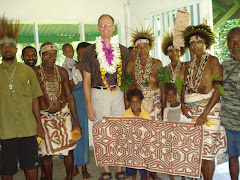
First Order Brothers, Third Order Brothers and sisters and SSF Companions welcome me to Haruru in PNG
Welcome to the Solomon Islands

A Prayer from Taize
Holy Spirit, enable us to turn towards you at every moment. So often we forget that you dwell in us, you pray in us, and that you live in us. Your presence in us is trust and continual forgiveness.
A daily prayer for the struggle
The world has the means to end extreme poverty. We pray that we will have the will.
Words from Dr. King in honor of his birthday
If you cannot be a spruce tree on the top of a hight mountain, be at least a fertile blade of grass in the valley.
If you cannot be an oak tree, at least be a shrub.
If you are not a highway, be at least a viable pathway.
If you cannot be the sun, try to be a small star.
Endeavor to find out the secret plan that should structure your life, and adopt it as a practice.
If you cannot be an oak tree, at least be a shrub.
If you are not a highway, be at least a viable pathway.
If you cannot be the sun, try to be a small star.
Endeavor to find out the secret plan that should structure your life, and adopt it as a practice.
Words of Wisdom
"We don't have to be "successful," only valuable. We don't have to make money, only a difference, and particularly in the lives society counts least and puts last."
from Credo,
by William Sloane Coffin
from Credo,
by William Sloane Coffin
For the Love of God
May the power of your love, O Lord, fiery and sweet as honey, so fill my heart as to withdraw it from all that is under heaven; and grant that I may be willing to die for love of your love as you died for love of mine.
The Absorbeat by St. Francis
The Absorbeat by St. Francis
A Prayer
Grant, Lord, that we, who have been redeemed from our unworthiness and made fit by Christ's sacrifice to share in his kingdom, may remember what we were and what we are, and may forgive as we have been forgiven; through Jesus Christ our Lord.
From the Australian Alternative Collets, 1985
From the Australian Alternative Collets, 1985
A Franciscan Blessing
May God bless us with discomfort at easy answers, half truths, and superficial relationships, so that we may live deep within our hearts. Amen.
May God bless us with anger at injustice, oppression, and exploitation of people, so that we may work for justice, freedom and peace. Amen.
May God bless us with tears to shed for those who suffer from pain, rejection, starvation and war, so that we may reach out our hand to comfort them and to turn their pain into joy. Amen.
May God bless us with enough foolishness to believe that we can make a difference in this world, so that we can do what others claim cannot be done. Amen.
And the blessing of God who Creates, Redeems and Sanctifies be upon us and all we love and pray for this day, and forever more. Amen.
I first heard this given by the late Jim Kelsey, Bishop of Northern Michigan and a great friend.
May God bless us with anger at injustice, oppression, and exploitation of people, so that we may work for justice, freedom and peace. Amen.
May God bless us with tears to shed for those who suffer from pain, rejection, starvation and war, so that we may reach out our hand to comfort them and to turn their pain into joy. Amen.
May God bless us with enough foolishness to believe that we can make a difference in this world, so that we can do what others claim cannot be done. Amen.
And the blessing of God who Creates, Redeems and Sanctifies be upon us and all we love and pray for this day, and forever more. Amen.
I first heard this given by the late Jim Kelsey, Bishop of Northern Michigan and a great friend.