Saturday, July 6, 2013
In the Center of the Labyrinth
Last Wednesday the brothers hosted a labyrinth walk at Little Portion. It was great to be here for it. The weather was beautiful, there was a good crowd. What was most important for me was the sense of an on-going ministry. I built the labyrinth 15 years ago, and people are still coming to visit it, finding it helpful. I had a feeling of almost parental pride, as much as I know anything about that. I never thought it would last so long. When we built it we had the idea that we'd missed the moment for labyrinths, that they were passing out of fashion. So we used wood chips to pave the paths, telling ourselves that it would grow over quickly if we wanted to allow that. The labyrinth was an experiment.
What we have discovered is that people still appreciate it. As I walked it, I found myself contemplating all the journeys I have taken in the last several years. I am often asked how I find "life on the move." I think all itinerant people have their ways of coping. For me, the most helpful thing is the constancy of prayer, and the familiar thread of our Office Book which allows me to feel connected with the other brothers and sisters around the world who use it. We are all basically on the same page on the same days--the international dateline notwithstanding. The labyrinth has helped me to pay attention to how I develop a contemplative perspective on my life--learning to stay the course, walking the path and being as present as possible to the events and emotions that surface for me. Sometimes I am gobsmacked by joy, other times I cringe with embarrassment. But when I can suspend the inner critic and accept the memory, forgive myself and if necessary resolve to forgive others, then I can move on. Eventually there is a time of connection: a deep and honest conversation, or a laugh shared with a friend that comes from deep within and sets me free from many petty concerns. Knowing people, being with them, puts the petty aggravations of travel into perspective. that is what I call a contemplative perspective--trying to see life from a larger perspective, to remember what is important.
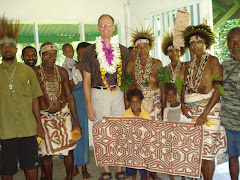
So, after three weeks at Little Portion, I am packing to go to Papua New Guinea, where the brothers have prepared an itinerary for me that will take me up and down that country. I've been to all the places and know what to expect--the unexpected! I am looking forward to seeing them all again, hearing about their lives and ministries, sharing their foods.

Monday, June 10, 2013
Simply Living Mission: We Did It!
This mission has been a little bit of an endurance test. I never really had the time to blog. When I had time, I didn't have an internet connection. Sometimes both were available yet I had no energy. C'est la vie. So it was basic, simple living, indeed! We went from Hilfield friary in Dorset to Plymouth in the diocese of Exeter, to Lichfield Diocese, Chester Diocese, Blackburn Diocese, Ely and Ipswich Bury St. Edmunds Diocese, and London diocese. We slept on concrete floors in some places. In others the bathing facilities were not only in another building, but we had to take a bus to get to them. We ate lots of sandwiches and quiche, though a really terrific meal every evening. But as St. Paul reminded us last week: endurance produces character, character, hope, and hope doesn’t disappoint us. And our hope is that all whom we met will have had a glimpse of a simple Melanesian, and religious, life--and a deepening sense of the possibility of living a simpler life, how it might be possible for you. As we’ve gone around England on this Simply Living Mission, two Scriptures became for me the keys for understanding what we were doing, Paul's first letter to the corinthians and the Beatitudes in Matthew's gospel, which was our Bible Study for the Mission.
First, from St. Paul, 1 Corinthians: how God chose the weak in the world to shame the strong, and we know nothing except Christ and Him crucified. We weren’t trying to shame anybody. But in his letter to the Corinthians Paul touches on the universal power of a small group of people witnessing to the power and beauty of holiness. We are a small group of pijin speaking people from one of the world’s most exotic cultures. We must appear a band of innocents abroad to cosmopolitan Brits! I am put in mind of Leonard Wibberley’s wonderful 1955 story “The Mouse that Roared” in which the Grand Duchy of Fenwick faces one of the world’s superpowers (the USA) and wins a war with them. The Solomon Islands, with a population of half a million is one of the smallest nations. On the Human Development Index it is 144 out of 185 nations--one of the poorest nations. Yet listen to us sing: The mouse that roared, indeed. We have met and ministered to and dare I say conquered the hearts of lots of people. We met with lots of elderly women, lots of school children. Some clergy days were fully booked, several were cancelled. It wasn’t a Billy Graham Crusade! As I have thought about this I realized we were exhibiting the beauty and power of littleness, or minority, as we call it in the Franciscan tradition.
“Blessed are the poor in Spirit” Jesus said in Gospel terms.
Minority living is manger living. God chose to be born in a manger, hidden and vulnerable, not in a palace. Blessed are the meek! From that place, the power of simple living has been shown to the world.
What could this mean in a world where senseless killings threaten the social fabric and heighten suspicions, divisions, hatred and more and more people have access to guns? In a world where war and killing seems the most sensible, effective way of achieving social change? In a world where climate change is making itself felt in longer, colder winters here, violent storms in America and the South Pacific, firestorms threaten homes and environment in Australia and America? It’s all well and good to talk of minority, but what we really need is a large scale change in society and a massive re-orientation of values.
During the mission we heard of tornados in Oklahoma and we sang of the butterfly: "God made the butterfly fly… " St. Francis and many of the world’s mystics from Hildegaard of Bingen to Rumi teach us we all come from God, the one source of everything. Physics teaches us no action takes place in isolation from the whole. Everything is interconnected. If a butterfly’s fluttering wings can be construed to make a difference to the earth, then there is no deriding or undervaluing the power of prayer, friendship, love and play in an era of war and widespread chaos and turmoil. Christians must always exhibit these things, even in times of persecution: we must be faithful! Blessed are the peacemakers. Blessed are those who hunger and thirst for righteousness sake!
Our Christian vocation is to proclaim Christ crucified. The symbol of our faith is the Cross, not the sword. We see Jesus hanging on the cross, not riding across the sky in a chariot pulled by six white horses. But the Crucifixion isn’t the end of the story. Paul is pointing to an enduring reality, one we have affirmed over and over again in our Mission. We created little power point talks on prayer, social justice and the environment. In a sense we aired our dirty laundry, the problems facing Solomon Islands. We talked of the simple things we do—offering friendship and hospitality, to address these problems. That it is in our brokenness, our vulnerability, that God can use us, fill us.
Blessed are the pure in heart.
One of the gifts we tried to bring was the willingness to talk about our brokenness, to show how such vulnerability can be an open door for Christ to come into your life as well as a liberating gift to others who suffer.
Being small, we can actually draw near to power in new ways. One brother said he was so surprised and happy at how humble and simple the Bishops of the Church of England are…
They may or may not be so simple and humble, but the brothers and sisters certainly invited everyone they met to talk simply, share honestly, dance and sing—fixing you with their friendly smiles, you couldn’t get away with anything less than that! Who could refuse Br. Albert’s invitation to dance to the panpipes? We danced in Ely Cathedral evensong with the girl’s choir (and the Dean) spilling into the aisles, at Selwyn College and with the dean there too, with the Mother’s Union—everybody! If you wanted to relate and connect with us, you had to say what you meant and be willing to dance and laugh and play. Quid pro quo. We drew near to power like the small mouse in Aesop’s fable called the Lion and the Mouse, in which the mouse chews through the rope netting that has captured the lion. The moral of the story is that there is no being so small it cannot help a greater one. Small, tiny, things can liberate the mighty and powerful: some may choose to leap from the high up places and join us of their own accord. Confronted by a simple joyful life live by our team, many may look at their lives in a new light and seek to change.
Simple living isn’t easy living. It isn’t about having nothing to do. But it is about engaging your neighbours and all the tasks of daily life, as many as you have, with clarity about your priorities. Earth and her peoples first! Live with passion. And let go of life’s disappointments with prayer and forgiveness. They are sure to bring you down and complicate everything. Be honest with yourself and others. With interior freedom like that you can accomplish prodigious works, find pleasure in your tasks and know the joy of simple Gospel living in the struggle for justice, peace and the integrity of creation.
I think if we can give you an enduring challenge, the legacy of the mission—let it not be nostalgia for our singing or fascination with our traditional dancing, wonderful as they are. To hang onto those things alone is pure sentimentality and a waste of time. Rather we challenge you to read your Bibles, and shape your lives as best you can by what you read and what you learn from trusted friends and associates. Become people who play on the floor with children. Spend time outdoors everyday, and take up a sport to play as often as you can. And sing—at the top of your lungs, in the shower, on long walks in the country side; but don’t be ashamed to shout out in church. If nothing else, singing like that simply makes you feel 100% better! Somehow it all comes right if you just let it out. God can’t do anything when your lips are sealed! Share food, tea, stories. Money even, if you have any. That should be your first priority—share what God has given you, don’t count the cost. People will very likely share back with you. And lastly, if you take our example to heart, travel whenever you get a chance. An American travel writer always says “all travel is political“—it changes how people understand each other, how they see and live on the earth. It challenges perception. You don’t have to go as far as the Solomon Islands. Go anywhere on the train or the bus—but get out of the house if you can. And do your own mission—laugh and talk with the people you meet. Like us you will very likely not meet too many powerful people, though you may be lucky like we were and meet some.
It is a simple way to open yourself to God’s grace. With God’s grace you will find a life that is happy, joyous, free, even if you happen to live it at full throttle. As the saint said long ago: the glory of God is the human person fully alive.
As a famous old aunty counselled: live, live, live!!
Thursday, June 23, 2011
More Martyrs
Yesterday was the Feast of St. Alban, the first martyr of Britain. Martyrs seem to be a theme with me recently...
Alban was killed by the Roman Empire in a crackdown on Christianity in the third Century. His death was voluntary: he volunteered himself in place of a priest to whom he'd offered hospitality. After a few short days of conversation with the priest, Alban embraced Christianity, and then was required to either turn in his guest, or offer himself. He did the latter.
I spent last Saturday at St. Alban's Cathedral, in (where else?) St. Albans, England. It was for the annual observance of St. Alban's Day. Hundreds of folks came--the event took me by surprise. I'd been expecting something stodgy and conventional. But it was nothing like that. Huge puppets dominated the outdoor procession. The spring which welled up to slake Alban's thirst was suggested by the local fire department blasting fire hoses from the shrubbery. Scores of children participated too: dressed as flowers, stained glass windows, soldiers and monks the procession was colorful and LIVELY!! The high point, for most of the little boys at least, was when the centurion who chops off Alban's head loses his eyeballs in some kind of divine retribution, and they roll around the grass...
I am not sure who the guiding genius is behind this extraordinary event. It got even better inside the Cathedral with the girls choir singing a jazz mass. The Dean of the Catheral is Jeffrey John, who seems unpopular with the Church hierarchy because he is a gay man in a relationship. I suspect he is the source of the razzle-dazzle. Even the way he introduced the different pilgrim groups had people laughing out loud--in an English Cathedral. I was totally charmed.
The day ended with everybody filing past the shrine of St. Alban singing special words to a familiar tune (The Battle Hymn of the Republic):
We sing of holy Alban and his suffering for the Lord,
of resounding words of witness for the Christ whom he adored;
of his boldness and his daring and his dying by the sword;
his faith is marching on.
Glory, glory, hallelujah! ...His faith is marching on!
It was an inspiring day. The classsical formulation is that the blood of the martyrs is the seed of the church: new life and growth and encouragement springs from their witness.
It worked for me. The Cathedral was packed. The Dean made us laugh and everyone felt welcomed: imagination was unfettered.
It made me think: imagine if this man was a bishop!
Alban was killed by the Roman Empire in a crackdown on Christianity in the third Century. His death was voluntary: he volunteered himself in place of a priest to whom he'd offered hospitality. After a few short days of conversation with the priest, Alban embraced Christianity, and then was required to either turn in his guest, or offer himself. He did the latter.
I spent last Saturday at St. Alban's Cathedral, in (where else?) St. Albans, England. It was for the annual observance of St. Alban's Day. Hundreds of folks came--the event took me by surprise. I'd been expecting something stodgy and conventional. But it was nothing like that. Huge puppets dominated the outdoor procession. The spring which welled up to slake Alban's thirst was suggested by the local fire department blasting fire hoses from the shrubbery. Scores of children participated too: dressed as flowers, stained glass windows, soldiers and monks the procession was colorful and LIVELY!! The high point, for most of the little boys at least, was when the centurion who chops off Alban's head loses his eyeballs in some kind of divine retribution, and they roll around the grass...
I am not sure who the guiding genius is behind this extraordinary event. It got even better inside the Cathedral with the girls choir singing a jazz mass. The Dean of the Catheral is Jeffrey John, who seems unpopular with the Church hierarchy because he is a gay man in a relationship. I suspect he is the source of the razzle-dazzle. Even the way he introduced the different pilgrim groups had people laughing out loud--in an English Cathedral. I was totally charmed.
The day ended with everybody filing past the shrine of St. Alban singing special words to a familiar tune (The Battle Hymn of the Republic):
We sing of holy Alban and his suffering for the Lord,
of resounding words of witness for the Christ whom he adored;
of his boldness and his daring and his dying by the sword;
his faith is marching on.
Glory, glory, hallelujah! ...His faith is marching on!
It was an inspiring day. The classsical formulation is that the blood of the martyrs is the seed of the church: new life and growth and encouragement springs from their witness.
It worked for me. The Cathedral was packed. The Dean made us laugh and everyone felt welcomed: imagination was unfettered.
It made me think: imagine if this man was a bishop!
Monday, June 13, 2011
Pentecost
Pentecost is about empowering.
New beginnings.
Growth.
Hildegard of Bingen said the color best associated with the Spirit is green--
the green of trees leafing out
herbs growing in the garden,
wheat sprouting in the fields.
The friary kitchen garden here in Dorset is an icon of fecundity! (I haven't figured out how to get photos off my cellphone onto the internet yet...soon, soon, soon...)
There are complaints of drought in other parts of England. A photo of burnt fields appeared in the newspapers recently. Bewildering weather patterns are a sign of global climate change, I fear. Whoever heard of a drought in England in May???
Nevertheless here in Doreset, at least our corner of it is GREEN. Pentecost came at the end of a long week of Chapter meetings. And the sap was rising all week! It was the first All Brothers Chapter, now expecting to meet every year at Pentecost. Every borther in the Province had a voice and a vote. We spent two days in small groups and a third n plenary, sharing the results of the small group work and making decisions for the year ahead. We concluded singing the praises of God. Everybody had a wonderful time. Not always the case at the end of a business meeting.
Every voice was honored.
Leadership was shared.
Creativity was everywhere.
These are key features for what I think must charatcterize Franciscan life!
And the week wasn't all work either. There was time for Brother John and me to get away to visit a nearby stately home/museum, Stourhead. I'd visited there in 1978: very faint impressions endured. It was a pleasure to re-visit especially the gardens, designed by Capability Brown. And we ate a Ploughman's lunch at a little country pub--all my favorite lunchtime foods of cheese, pickles, ham and lettuce...
Another highlight was gathering with all the brothers and watching Of Gods and Men together. It is a story of a small communityof Cistercian monks lifing in algeria who decide to stay at their monastery during a time of Islamist jihad. Most of the monks are killed. It is a true story, from 1996, I believe.
The other color for Pentecost is red, the red of fire. Of martyrdom.
I had a strong sene of identification with the brothers in the film. Their community life was not so different from ours in SSF--small, fragile, poor. Yet the relationships among the brothers in the film rang true too: both the small frictions among them and the profoundly loving way they came together to make their decisions and face the future together. In one scene they were in the chapel singing, as a helicopter circled tightly overhead. They gathered together, in a kind of communal embrace. I have felt that at time with my brothers. But thank God, never under threat of death.
Their fear and their faith moved me to tears. Their decision not to run from the terrorists, but to stay with their neighbors, knowing what might happen to them struck many of us SSF brothers in a deeply personal way. What would I do (or what will I do) in similar circumstances? They wrote to the terrorists as their brothers, and recognized a terror-filled death was one shared with Jesus.
It is the highest hope and greatest fear of a religious calling.
Come Holy Spirit, fill the hearts of your faithful people, and kindle in us the fire of your love.
It was an enlivening, green time.
New beginnings.
Growth.
Hildegard of Bingen said the color best associated with the Spirit is green--
the green of trees leafing out
herbs growing in the garden,
wheat sprouting in the fields.
The friary kitchen garden here in Dorset is an icon of fecundity! (I haven't figured out how to get photos off my cellphone onto the internet yet...soon, soon, soon...)
There are complaints of drought in other parts of England. A photo of burnt fields appeared in the newspapers recently. Bewildering weather patterns are a sign of global climate change, I fear. Whoever heard of a drought in England in May???
Nevertheless here in Doreset, at least our corner of it is GREEN. Pentecost came at the end of a long week of Chapter meetings. And the sap was rising all week! It was the first All Brothers Chapter, now expecting to meet every year at Pentecost. Every borther in the Province had a voice and a vote. We spent two days in small groups and a third n plenary, sharing the results of the small group work and making decisions for the year ahead. We concluded singing the praises of God. Everybody had a wonderful time. Not always the case at the end of a business meeting.
Every voice was honored.
Leadership was shared.
Creativity was everywhere.
These are key features for what I think must charatcterize Franciscan life!
And the week wasn't all work either. There was time for Brother John and me to get away to visit a nearby stately home/museum, Stourhead. I'd visited there in 1978: very faint impressions endured. It was a pleasure to re-visit especially the gardens, designed by Capability Brown. And we ate a Ploughman's lunch at a little country pub--all my favorite lunchtime foods of cheese, pickles, ham and lettuce...
Another highlight was gathering with all the brothers and watching Of Gods and Men together. It is a story of a small communityof Cistercian monks lifing in algeria who decide to stay at their monastery during a time of Islamist jihad. Most of the monks are killed. It is a true story, from 1996, I believe.
The other color for Pentecost is red, the red of fire. Of martyrdom.
I had a strong sene of identification with the brothers in the film. Their community life was not so different from ours in SSF--small, fragile, poor. Yet the relationships among the brothers in the film rang true too: both the small frictions among them and the profoundly loving way they came together to make their decisions and face the future together. In one scene they were in the chapel singing, as a helicopter circled tightly overhead. They gathered together, in a kind of communal embrace. I have felt that at time with my brothers. But thank God, never under threat of death.
Their fear and their faith moved me to tears. Their decision not to run from the terrorists, but to stay with their neighbors, knowing what might happen to them struck many of us SSF brothers in a deeply personal way. What would I do (or what will I do) in similar circumstances? They wrote to the terrorists as their brothers, and recognized a terror-filled death was one shared with Jesus.
It is the highest hope and greatest fear of a religious calling.
Come Holy Spirit, fill the hearts of your faithful people, and kindle in us the fire of your love.
It was an enlivening, green time.
Tuesday, May 31, 2011
In Communion
I can't believe it has been a month since I last posted on the blog. It has been a month of chapter meetings: first in Brisbane, Australia, then on Long Island, NY at Little Portion. Both meetings were good and interesting.
But combine jet lag with meeting-lag and I didn't have much juice in my batteries!
These past few days, however, I've been able to get back up on my feet and begin to do some things. Most enjoyably, I've been gardening. I've got blisters to prove it, and the flower boxes are now brimming with marigolds, shrubs have been pruned and the terraces swept. It is hard to do this around Little Portion without thinking abut all the brothers before me who have popped their blisters doing the same tasks. I feel very closely connected with them, part of the continuity of religious life, the "Quotidian Mysteries" Kathleen Norris writes about. Every day mystery of communion with brothers, nature, God: the communion of saints and the communion of the cosmos.
As I swept this morning I remember how Jon and I would watch the bees and drink coffee together next to the herb garden, resting from weeding. Jason would smoke his pipe and spend his summer evenings joyously weeding a lush English border he'd planted next to the arbor. Dunstan still weeds with a table fork and has a personal relationship with every bulb and bush ever planted at Little Portion, as well as living on a first name basis with the chipmunks and the birds.
Yesterday I was running along Shore Road, along Mt. Sinai Harbor, and a box turtle was just edging out onto the road. Fearing for its safety I snatched it up and carried it across the road: power to the box turtle!
Inside I typed up all the Norms and Policies for the Province so that they could be restored to our Manuals. These too are a trip down memory lane. Every Norm, which is really a statement about things we have agreed upon as a chapter, is a story. I remember why we said we wanted brothers to learn Spanish. I remember why we agonized for a long time over job descriptions. There are older norms about participating in demonstrations: I can just hear the brothers debating it, and the differing points of view. These ancestor brothers still have a vote, as their opinions have been captured in the Provincial Norms.
But combine jet lag with meeting-lag and I didn't have much juice in my batteries!
These past few days, however, I've been able to get back up on my feet and begin to do some things. Most enjoyably, I've been gardening. I've got blisters to prove it, and the flower boxes are now brimming with marigolds, shrubs have been pruned and the terraces swept. It is hard to do this around Little Portion without thinking abut all the brothers before me who have popped their blisters doing the same tasks. I feel very closely connected with them, part of the continuity of religious life, the "Quotidian Mysteries" Kathleen Norris writes about. Every day mystery of communion with brothers, nature, God: the communion of saints and the communion of the cosmos.
As I swept this morning I remember how Jon and I would watch the bees and drink coffee together next to the herb garden, resting from weeding. Jason would smoke his pipe and spend his summer evenings joyously weeding a lush English border he'd planted next to the arbor. Dunstan still weeds with a table fork and has a personal relationship with every bulb and bush ever planted at Little Portion, as well as living on a first name basis with the chipmunks and the birds.
Yesterday I was running along Shore Road, along Mt. Sinai Harbor, and a box turtle was just edging out onto the road. Fearing for its safety I snatched it up and carried it across the road: power to the box turtle!
Inside I typed up all the Norms and Policies for the Province so that they could be restored to our Manuals. These too are a trip down memory lane. Every Norm, which is really a statement about things we have agreed upon as a chapter, is a story. I remember why we said we wanted brothers to learn Spanish. I remember why we agonized for a long time over job descriptions. There are older norms about participating in demonstrations: I can just hear the brothers debating it, and the differing points of view. These ancestor brothers still have a vote, as their opinions have been captured in the Provincial Norms.
Wednesday, April 27, 2011
Australian Easter
I celebrated the Easter weekend in Darwin, Northern Territory. Talk about hot! But Br. James Andrew's house is set to capture any breeze blowing through, and it was fairly comfortable. I preached on good Friday at the little Anglican Church in Palmerston that Br. James attends. After that we had a picnic on the beach. Easter Sunday we were back in Palmerston.
I've just finished reading a couple of great books: Rob Bell's "Love wins" and Eugene Peterson's "Practicing Resurrection." Rob's book had been coming up on my Amazon "recommended book list" for several days, but it wasn't until after I read a review of it in the UK Church Times that I got it. Apparently he gets protesters appearing when he speaks about this book because he holds out the possibility of heaven for everybody who wants it, and insists that Jesus is the "Way" meaning it in the broadest possible terms: even people who aren't Christian but practice love and compassion and justice are part of Jesus' Way. It's depressing to think people would get angry about that.
Practicing Resurrection is another very helpful book. Peterson is the author of "The Message," and after listening to Br. Tom read from it during my stay in Los Angeles, I was intrigued to see what the guy has to say. The book is a fairly thorough exegesis (study) of the Letter to the Ephesians. I found it very liberating to read.
Lots of time to read because it is wet weather here in Brisbane, Australia. There is more flooding to the west of the city, but the part the brothers live in is high and safe from the floods.
I've just finished reading a couple of great books: Rob Bell's "Love wins" and Eugene Peterson's "Practicing Resurrection." Rob's book had been coming up on my Amazon "recommended book list" for several days, but it wasn't until after I read a review of it in the UK Church Times that I got it. Apparently he gets protesters appearing when he speaks about this book because he holds out the possibility of heaven for everybody who wants it, and insists that Jesus is the "Way" meaning it in the broadest possible terms: even people who aren't Christian but practice love and compassion and justice are part of Jesus' Way. It's depressing to think people would get angry about that.
Practicing Resurrection is another very helpful book. Peterson is the author of "The Message," and after listening to Br. Tom read from it during my stay in Los Angeles, I was intrigued to see what the guy has to say. The book is a fairly thorough exegesis (study) of the Letter to the Ephesians. I found it very liberating to read.
Lots of time to read because it is wet weather here in Brisbane, Australia. There is more flooding to the west of the city, but the part the brothers live in is high and safe from the floods.
Wednesday, April 13, 2011
Fine Fall Days Down Under
I spent a week in New Zealand, with the Brothers at Hamilton. Hamilton is a small city on the North Island, far from Christchurch and the earthquake. But we were not isolated from the effects of the earthquake--being a small country, the brothers knew of plenty of people who'd been affected directly. And there are lots of fundraisers for the earthquake victims being advertised on T.V.
Br. Simone and I enjoyed a day out, going to visit several places where volcanic activity was bubbling to the surface. Steaming rivers and boiling pools of mud are big tourist attractions in New Zealand. Best was swimming in the hot springs at Rotorua.

Here we are standing on a beach with the Pacific ocean stretching out behind us.
Brothers Damian Kenneth and Brian hosted a dinner party during my stay. It was a very ecumenical affair with Roman Catholic, Anglican and Romanian Orthodox clergy.
Another evening Simone and I visited a homeless shelter where he volunteers. We took some food, then stayed to talk. I was impressed by the experience--we could have been in New York, Washington or California. Its depressing to think homelessness is such a universal experience. The major difference here is that the men were mostly Maori. The other universal quality is the selflessness of the volunteers, the sign of never failing grace and generosity and that where homeless exists and the worst of urban life, there is always it seems right alongside it, the very best of human behavior: generous, caring and creative in the face of tremendous need. I was reminded of a line of a liturgy from the 80's: God came not to take away our suffering but to be with us in it. Yet with some political determination and a minor allocation of resources (compared to, say, defense budgets) we could make homelessness history.
The last weekend I was there I gave a quiet day for about 10 people: "Remember who you are" was the theme. I told them "be who you are before God: be simply yourself." The desire to do this is evidence of God's action. We spent the morning remembering family, hometown, the costs of forgetting our background: vulnerability to social marginalization, addictions. Remembering brings the will to work for healing and can unleash creativity. In the afternoon we spent time remembering who we are in God's eyes: beloved, worthy, empowered, forgiven. And to remember that we ARE the church. I ended up with the words of Eugene Peterson: Now God has us where he wants us--with all the time in this world and the next to shower grace and kindness upon us.
Now I am in Australia. We spent the other day digging trenches to divert rain water, and since then we've not had any rain: glorious early autumn weather. Generally though getting spiritually ready for Easter and the cold winter months.
It is such a head trip switching hemispheres!!
Br. Simone and I enjoyed a day out, going to visit several places where volcanic activity was bubbling to the surface. Steaming rivers and boiling pools of mud are big tourist attractions in New Zealand. Best was swimming in the hot springs at Rotorua.

Here we are standing on a beach with the Pacific ocean stretching out behind us.
Brothers Damian Kenneth and Brian hosted a dinner party during my stay. It was a very ecumenical affair with Roman Catholic, Anglican and Romanian Orthodox clergy.
Another evening Simone and I visited a homeless shelter where he volunteers. We took some food, then stayed to talk. I was impressed by the experience--we could have been in New York, Washington or California. Its depressing to think homelessness is such a universal experience. The major difference here is that the men were mostly Maori. The other universal quality is the selflessness of the volunteers, the sign of never failing grace and generosity and that where homeless exists and the worst of urban life, there is always it seems right alongside it, the very best of human behavior: generous, caring and creative in the face of tremendous need. I was reminded of a line of a liturgy from the 80's: God came not to take away our suffering but to be with us in it. Yet with some political determination and a minor allocation of resources (compared to, say, defense budgets) we could make homelessness history.
The last weekend I was there I gave a quiet day for about 10 people: "Remember who you are" was the theme. I told them "be who you are before God: be simply yourself." The desire to do this is evidence of God's action. We spent the morning remembering family, hometown, the costs of forgetting our background: vulnerability to social marginalization, addictions. Remembering brings the will to work for healing and can unleash creativity. In the afternoon we spent time remembering who we are in God's eyes: beloved, worthy, empowered, forgiven. And to remember that we ARE the church. I ended up with the words of Eugene Peterson: Now God has us where he wants us--with all the time in this world and the next to shower grace and kindness upon us.
Now I am in Australia. We spent the other day digging trenches to divert rain water, and since then we've not had any rain: glorious early autumn weather. Generally though getting spiritually ready for Easter and the cold winter months.
It is such a head trip switching hemispheres!!
Subscribe to:
Posts (Atom)