Saturday, September 13, 2008

Anti-malarials


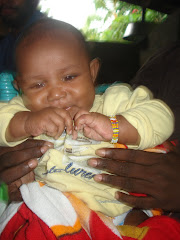
Today I started my anti-malarial medication in anticipation of my trip to The Solomon Islands on Tuesday. I feel a bit queasy, but I know from experience this will pass. There are three recommended medications one can take which are supposed to inhibit malaria (none of them can actually guarantee you won’t get it, but they decrease the likelihood, so I take them). One of the recommended medications is called Larium; this is what the US military uses with the troops in Iraq. One of the side effects cautioned about on the package is mental illness (!) or possible death in rare cases (!!) Another option is Malarone. This medication can cause drowsiness, nausea, and sickness too. Both of these are incredibly expensive, the Blue Cross-Blue Shield co-pay is $50.00, heaven knows what the medications would cost without insurance. The third option is doxycycline. It is by far the cheapest, and its greatest side effect is extra sensitivity to the sun (which can be problematic when traveling to the tropics). Some people have raised concern about the effect of taking it for two months. I’ve tried the first two on previous trips (and survived); and contracted malaria while taking Larium. It all seems a bit of a crap-shoot, so for variety’s sake and to save money I am trying the doxycyline this time. I’ve got 80 tablets, lots of sun block and a new hat.

But these are all the exigencies that go with the job and my ministry among and with my brothers from The Solomon Islands and Papua New Guinea. They don’t take any anti-malarial medication, only using chloroquine when they get malaria. Sadly malaria is a fact of life. First you get very, very cold, and start to shiver and shake. I got into bed under many quilts and blankets. Then you get a very high fever and think you will combust spontaneously. Then the fever breaks, sweat drenches your bedding, and the shivering starts over. Double doses of primaquine and doxycyclene took care of it for me.

The most widespread (and effective) precaution is the use of sleeping nets. They are very cheap by Western standards, yet a serious expense for the Islanders. I am grateful for my net when I lie in bed listening to the mosquitoes in a holding pattern around me. There are organizations which distribute nets to people in the Pacific, South America, Africa, India and Asia: send money! Malaria is awful and a death sentence for babies.

But otherwise, everything is fine…

I have had a terrific time in Australia. The First Order Chapter in Stroud went well. Here we all are in our different shades of brown: the cheapest cloth available, in each case! An extra blessing was being in the historic monastery. It was built in 1980 and the Poor Clares lived there until 1998. We were fortunate to have Sister Alison Francis representing the Second Order to our Chapter. She was one of the pioneer sisters, and had many stories to tell about making mud bricks, battling snakes under the refrigerator and all kinds of Down Under tales. The buildings are extraordinary: all curvey and spontaneous-looking: they are a real work of art. The roof leaks everywhere—not normally a problem in drought ridden Australia, but we were blessed with two weeks of constant down pours…

It is spring down here, and the wisteria came into full bloom outside my bedroom window.

Monday, September 1, 2008

Report Given at Chapter

Report of the Minister General SSF

First Order Chapter August/September 2008

Stroud, NSW, Australia

Going around the world, staying with the brothers, I have been privileged to hear many stories. I have found that a large part of my job is to listen to brothers. Sometimes I may have to pursue them and get them to talk. Nevertheless storytelling is not just about information sharing. It is about creating relationships. We sit, we talk, and I take their photograph. These budding relationships are the necessary conditions for the conversion of my life and (I pray) for lasting Gospel work. Was it Simon of Stylites who said the ear is the organ of conception? Something has been touched in me; it’s growing! And I want to share with you some of my reflections on all this listening I have been doing.

First, the mise en scene: good stories need to be connected to time and place. I have heard incredible stories told on verandahs chewing betel nut, standing in the courtyard of Hilfield drinking tea, sitting around the fire at Alnmouth, in the dining room of Haruro where I heard about how a pig was killed in a night-time hunt for our dinner, over meals in restaurants. Brothers told stories on the San Francisco MUNI, ferries on the Solomon sea, automobile drives across the moors of southern England, bathing in a warm tropical river: stories about the early days in SSF, the stories of the first SSF brothers in PNG, the brothers response to the disaster in Papua New Guinea, the building of Stroud brick by brick on land slated for a garbage dump, the moving of the friary building in Auckland; stories of how brothers died, stories about the SSF participation in the Solomon Islands peace making efforts, testimonials about praying for peace in Northern Ireland; reminiscences of Algy bringing the early communities together, of Bill Lash and his driving (and his equally remarkable leadership in India), of brothers working on the docks in the East End of London; these were added to stories I already knew about Fr. Joseph, the early days of San Damiano, the Orange City friary, the Minneapolis friary, the Navajoland mission, Dunstan’s VW bug, the early days of Little Portion. I heard stories again about the 1982 chapter and the re-founding of the American Province. I have heard literally hundreds of stories about brothers’ school days, their decision to become brothers, their family’s reactions, their own experience of community life and what keeps them in community. Francis reached beyond the grave, and I have been reading his stories on-line. Some talk of the community with gratitude, some have an attitude. My brothers and their stories are an enormous gift and joy to me. They have been a kind of SSF Fioretti. Our Franciscan stories are exotic: just thinking of all the places we are, and have been, makes me a bit giddy. These Franciscan tales are deeply grounded in the peripheries of the world power structures, and they are about non-famous people (I almost said “ordinary” but that would be disingenuous). Many of these stories are about moments when the storyteller felt particularly alive or connected to the Franciscan story, or sometimes moments of terrible doubt or sadness that took him to places inside himself that became in retrospect places of great blessing through the alchemy of God’s grace.

The stories we tell are not only the treasures that we offer each other in love and trust and intimacy, but they are the charter for our future. They are the living link between bad times and good, the testimonial of God’s blessing in our life as a community so that we will have the confidence to face the difficult days as they dawn on us knowing we are in a great company. There never was a day in SSF when everything was perfect; we’ve always been responding to God’s grace-in-the-moment.

We all have different stories and yet we have a common hope. This is the thing that is growing in me: hope for us and for our mission to live and share the Gospel. There is living in each of us the hope of our calling, to live a life of love and joy, serving people in the name of Jesus Christ. Our hope is rooted in St. Francis. The Franciscan stories have inspired, agitated and troubled us in many different ways. We go back to these stories as we tell our stories, finding ways to frame our experience. A brother once told a story about overcoming his fear of meeting lepers by remembering how Francis embraced the leper and encountered Christ. So the story from the Franciscan tradition helped re-frame a story of fear into a story of joy and liberation. As storytellers we can unleash the power others feel as they struggle to find ways to honor that strange feeling they have to make a difference, serve God, doing something beautiful, share their healing with fellow sufferers: whatever, it is different for each of us. Stories in which we share a bit of our own foolishness or failure often connect more deeply with people than when we brag about our accomplishments. At least it is true for me because other people’s accomplishments often leave me feeling a bit flattened, wondering what I’ve been doing with my life while they have written 10 books, taught important classes, fought huge battles. Because of the intimacy created when we sit down to tell our stories, we are in a privileged relationship with each other. The stories we tell frame our memories and foster the future.

As Anglicans most of us are still sifting through the story of the Lambeth Conference. What emerged for me from the conference was the importance of reaching out and engaging other people, especially the ones we feel most threatened by; again Franciscan stories come to mind: Francis and the Sultan, Francis and the Wolf of Gubbio. Relationships are converting. Let me tell you a story: remember how the Sudanese bishops issued a statement and gave a press conference calling for Bishop Gene Robinson’s dismissal and/or breaking communion with the Episcopal Church. I kept thinking about this, and it really bothered me. I’d find myself gritting my teeth as I walked along, imagining all the things I’d do or say to one of those Sudanese bishops. One day I remembered Francis with the Sultan, and decided I too should meet my so-called enemy. Maybe he’d welcome gay people after he met me. So we met, and at first it didn’t go well. Then he said we should pray about it. I immediately grabbed his hand. After praying with this Sudanese bishop and holding his hand while we prayed, I found I couldn’t hate the man. I imagined him saying Mass, blessing people, eating his food: a lovely gentle human being. A huge burden was taken off of me and I suddenly could see that no matter what the long term outcome of the conference, God was there at Lambeth, bringing people together, healing wounds, and opening different channels of communication. Francis never stopped or prevented a war, but his example still has the power to agitate me into seeking God’s help to change my life—over and over again, a day at a time.

Stories provide a glimpse of the immensity of the world and give us a reminder that our life, our individual lives are not the measure of all things. Does God have an over- arching plan? Or is it enough that God is with us, funding our imaginations with innumerable, sacred stories and providing the true measure of love and sacrifice and joy as we negotiate our way through life?

I say all this to suggest that I see us, in the context of the world today, as people of the story. Troubadour is a Franciscan image. The way the brothers reach out, opening their lives to each other and to the world is an expression of strength through vulnerability; as St. Paul reminds us, God’s strength is made perfect in human weakness. If we can get people to listen to us and care about what we are saying we are well on the way to unleashing Gospel power in the world.

The underside of our stories is a widespread sense of inadequacy. We agonize about our life, our commitments and our failures. We think we should be doing more, that we don’t live the Franciscan life fully enough, that other people are doing it better, we think our trouble with English disqualifies us, or that because people expect certain things of us we should try to meet their expectations: but we just can’t! It is a classic case of judging our insides by others’ outsides—judging how we feel by how other people appear to us. In many cases this comparison can be very debilitating and vocation destroying. Of course we all have much to learn and there is room for improvement in all of us. But if we could only begin to look at our attributes with gratitude we could become even stronger in our Franciscan identity and witness. Instead of thinking we are too old, sick, uneducated, lacking in formation, too young, or inexperienced, I wonder what would happen if we began to consider what God might require of a grateful old man like me, a village boy like me, a new Christian convert like me, a Catholic priest like me? Each and every one of us has inside himself all he needs to have an amazing ministry. When he adds it to the gifts of his brothers, our community has all it needs at this very moment to give full expression to the Franciscan charism. We don’t need any more schooling—though schooling is always a good thing. Our formation is adequate to touch the hearts of men and women with the love of God, though we are all of us engaged in a life long process of formation. Each of us has a gift or ability that the community as a whole needs. God did not call any of us as potentially useful brothers, or eventually adequate ones. No! Right now, each and every one of us carries the Gospel, our piece of it. When we share it, God often writes another chapter of it in our hearts, so the story becomes bigger.

The negative stories we tell ourselves are not humility. They are bullets in the foot, wounds that can incapacitate us. But who thinks he is being negative when he airs a long held grievance? The only ways in which to hear the story we tell ourselves is to try and take a step back and see if we are living the life we feel called to live. Does your life seem boring, unimportant, and mechanical (add your favorite adjective)? We make these judgments because we have another, punishing story in our minds that says “I am boring, unimportant, and unimaginative.” Or we say: “I have to live this way, because if I don’t do ‘x’ nobody else will, and then something else won’t happen, …. and eventually civilization as we know it will collapse (hyperbole added to evoke the compelling nature of compulsive thinking patterns).” I hear versions of these stories in every friary.

What then is a brother to do? He can talk to somebody and try to get a different perspective. One writer has put it: “unhappiness can stem from having only one perspective to play with.” My greatest obstacles have been overcome by asking my brothers what they think of a situation. Sometimes they have just laughed at me, and I realized the problem was only in my head. Other times we shared a concern and found a new way of looking at things.

A case in point: our future as an order is one of those big problems or obstacles that seems to live among us. At one chapter meeting I sat in on a group that talked about the death of SSF at great length. Finally I said perhaps that province was going through difficult times, but certainly in other provinces the issues are about welcoming and forming many new brothers. The difference in perspective is more than just interesting. It describes the work before us. How do we work with the different population statistics of our provinces? We are an international order. Like the Anglican Communion as a whole, SSF has more brothers in the global south than in the north, in developing nations than in developed nations. The stories of the brothers contain the evidence we need to discover the way forward. Listening to the reports, listening to each other in chapel, at meals and in the down times, I wonder if we can hear the voice of God calling us to new risks, new ventures, and new ways of being human no matter where we live? What is the gift in our diverse community that can help us all?

When the brothers told the spouses at Lambeth about the joint efforts of the religious communities to bring peace to the Solomon Islands, those people nearly jumped through the roof. The important factor for me was that every brother and sister was considered part of the effort, not just those who dodged bullets. The idealism, joy, increased sense of hope and commitment, the power unleashed by their story had an enormous impact not only on those people in the room at Lambeth, but through them on the world. Can we see everything we do as part of the story of the peace effort, part of the effort to heal the earth? It is not just a turn of phrase, but an attitude, a value.

Much of our reason for being as an order is to be in relationship with the marginalized in the world, and to strengthen the Christian faith and commitment of people we meet, sparking their creativity, expanding the circle of friends and colleagues and partners in the Gospel life and ministry. We have Franciscan connections in Zimbabwe, a place of strife and uncertain future; in Brazil and the Coral Triangle of the South Pacific, two of the environmentally key areas of the globe; we have Franciscan connections in USA and Europe and Asia. Multiply these few connections by the number of First Order Sisters, Poor Clares, and members of the Third Order, square this number with our ecumenical contacts among other Franciscans, Franciscans International and other NGO’s and the result is… (Math was never my strong point, but you get the picture). We must stop telling ourselves we can’t do something. Listen to the story God is telling us: we exercise a tremendous influence, and can do so even more.

Listen to your hearts, listen to each other, and listen to God. Give thanks for what God has done in your life, and what God is doing among your brothers. God has prepared an audience for us; tell the good news wherever you go!


Friday, August 22, 2008

Religion and Food

Religion and food are two things I am always curious about. When I travel I want to see churches and temples and I want to try local food. I have been interested in these things since I as a teenager reading Gourmet Magazine, vicariously traveling the world with Lillian Langseth-Christiansen and Ronny Jacques (the photographer). Of course then I’d drive my mother crazy trying to buy exotic ingredients for the recipes that followed each article. The food gave a sense of the exotic, but also provided a way to feel what it might be like to live in a foreign country; at least I could eat what they ate, I told myself. Religion, on the other hand, appeared in Gourmet as romantic cathedrals or charming devotees praying in romantic places to be admired before going to a charming little restaurant where they serve the finest ceviche, or whatever. As my vocation developed my interest in religion became a personal search for meaning and connection. My sense of calling first struck me most forcefully standing in Sacre Coeur in Paris, staring up at the depiction of Christ in the dome, while all those charming Parisians bustled about lighting candles before going home for their coq au vin. Now that I am more or less always on the road, I still look for local food, and opportunities to pray.

In Korea I have had some amazing meals and some extraordinary encounters with religion, both Christianity and Buddhism. First the food! Every restaurant we’ve eaten in has served meals on low coffee table height tables. I find it excruciating until the legs go completely numb. Once numbness sets in, I don’t feel any pain (until I try to stand up, that is!). But authentic eating experiences are serious business, so I would never sit in a chair. No pain, no gain. I am afraid I’ll fail as a restaurant reviewer for Gourmet because I didn’t have a notepad to write down the names of the things I ate. But this is a Franciscan blog, anyway. The brothers weren’t always too sure what it was either, or at least not the English translation. But on my first day we ate walnut jelly cut in cubes with a fiery hot chili sauce. Christopher John said it was a real test of chop stick proficiency if you could get the jelly to your mouth without wearing it. Served with this was a plate of noodles and fried tofu. Now were the noodles buckwheat noodles. Some said yes, some said no. I am not sure if we were all sure what we were talking about, but we all had opinions, and the noodles were delicious! Small paper cups of Nescafe gave the meal an authentically ethnic close.

Another night, after touring the border with the communists and prowling around in the dank tunnels the North Koreans have burrowed under the border, we were starving. So we went to a favorite Franciscan restaurant (i.e. cheap) and squatted around a low round griddle. I was given a place in the corner so I could lean against a wall. A hostess came and unceremoniously dumped on the griddle a huge bowl of chopped cabbage, mixed with rice cakes, yams, and chicken coated in the favorite fiery hot chili sauce. This was stirred around until she finally pronounced it safe to eat (no raw chicken bits). It was fantastic! The cabbage had become soft and sweet, and the yam provided a lovely counterpoint texture. The chili made my nose run, so it was probably just about right.

Traveling by bus to visit our Franciscan sisters in Gumi, Br. Christopher John contacted some friends of his who are very well off. They met us and took us to a fabulous restaurant where there was a well under the table and portable seat backs to rest against: first class. Lunch was a banquet: octopus, sting ray (while all these are ordinary fish, I couldn’t help thinking of Dame Edna’s comment, “nothing so scrumptious as an endangered species!”), chicken, beef in teriyaki-tasting sauce, and about 8 kinds of kimchee. Kimchee can be liquid (it tastes like the juice from a sauerkraut jar), or slices of pickled radish, or large pieces of cabbage with red chili sauce, green beans and leaves and garlic, sesame leaves: it seems the sky is the limit. We ate small rice balls that were brought to the table wrapped in leaves, slices of yam, acorn squash and chunks of corn on the cob, watermelon, noodles in broth.

Another night the retired Bishop came for evening prayer and took us out to dinner to a restaurant which featured 101 ways to eat tofu. They fried it at our table and we added flavor from a flotilla of small side dishes. Then a large tureen of boiling red broth with large pieces of tofu was brought to the table. No matter what you do to it, tofu is tofu—and I enjoyed every bite.

Religion is going to get a bit short changed here, I am running out of time: have to pack to go to Australia. Nevertheless, the brother’s chapel is wonderful. The floor is covered with lacquered paper, and again we crouch on cushions. The lectern is a traditional Korean desk and the altar is a low table; we saw exquisite examples of these kind of furnishings in Gyeongbokgung, the royal palace in Seoul.

Visiting the Korean Franciscan Sisters in Gumi, we had a terrific liturgy in a somewhat Victorian-looking chapel. Pictured here is the inside of their home.

My hankering for exotic religion got satisfied when we visited a Buddhist temple in Seoul. The monks had put up many colorful lanterns as a protest against the President of Korea because he has systematically curtailed their life. The liberal Christians also protest against him for he same reason. He is particularly fond of his very conservative Protestant faith. I always like to see religion in the public forum, so to speak. In the area around the temple we could hear the people chanting. Peeking through the doors, I saw rank on rank of lights burning in front of some very impressive statues.

I watched a Buddhist monk walk across the courtyard. He looked very relaxed, a bit focused on meeting the person he was walking towards: smiling at her, and bowing his head as he walked. I suddenly had a memory of all the times I’d be walking towards the friary and see somebody I knew waiting by the door. You could hear the brothers singing in the chapel, smell dinner cooking in the kitchen. My ordinary is another person’s exotic. I find deep reassurance and hope watching this small Korean encounter; we all do so many of the same things, in similar ways. Life is beautiful and I feel vulnerable to it.

Francis always told his brothers to go among people of different cultures and simply share their way of life. If the example of the brothers’ life provoked questions, well and good; then was the chance to share the truth of Jesus Christ. Learning to go among the peoples of the earth with respect and love, I pray they see me and recognize something too. After swapping recipes we may get down to deeper things, deeper hungers, greater hopes and possibilities.

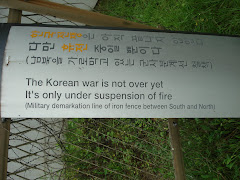
Hanging near the border with North Korea is a large bell. It is made of wood or papier mache or something, not metal. It is called the Peace Bell. It stands as sign of the hope and longing for the people of Korea, and people everywhere, for peace in this world. Never have wars sorted people out. I have a great deal more faith in travel writers, cooks, monks and friars.

Wednesday, August 13, 2008

A Home near the DMZ


"Welcome to the Society of St. Francis" the sign says.

I arrived in Korea last night after a nearly 14 hour flight from Washington D.C. As we traveled back to the friary from the airport, Br. Christopher John was pointing out the various local attractions. One thing he said pierced my jet-lagged fugue state: “near the DMZ.” It turns out we are very near to the border. All day I have been thinking about how the brothers have placed themselves in an uncertain, in-between place. It is not as if they live on the Gaza strip or in Iraq, but just a month or so ago a tourist was killed at the border. It is still very difficult to travel; the friars helped to organize a peace pilgrimage to North Korea and all cell phones, cameras and laptops had to be left behind. The border and all that it means to the people of Korea is just “over there.”

This little friary seems to be part of the huge drama of the reconciliation of a people who have suffered for many years. Obviously, nearly all prayer and conversation is carried on in Korean, so any words in English stand out with a special vividness since I don’t understand any Korean. The three brothers have been reading the lessons at the daily office in English, which seems an incredibly generous thing to do. At any rate, this morning’s lesson was about the parents of Samson entertaining an angel of the Lord; they played an important part in the story of salvation by offering a simple meal. So the simple things can have the most far reaching impact.

The brothers’ prayers and welcome to men and women seeking a time and space for quiet seems all the more profound to me. There were three guests here when I arrived. Like most of our friaries around the world, there are usually a few people around. One of the essential pieces of being a peacemaker is to carry on living with integrity and joy and affirming life, welcoming people into clean and orderly spaces, and the humane routines of shared meals, silence, prayer, laughter. Franciscans seem to thrive in places like this. One of the things we talk about is that the witness of life is often more eloquent than words.

So today we shopped, ate lunch (walnut jelly and buckwheat noodles!) then went for ice cream (black sesame seed and walnut—walnuts play a big part in the local food), looked at dams, roads and lots of tunnels and other construction projects. The brothers shared a dislike for the construction boom, pointing out the encroachment on the rice paddies, the cheap and gaudy tourist facilities. And we told stories about our lives, our hope for the Franciscan community in Korea. I has been an incredibly rich and eloquent day.

Saturday, August 9, 2008

Ecumenical Dialogue


This week I traveled to Washington D.C. for a week of engaging conversations with some Roman Catholic Franciscans. The convener has been the Minister General of the Society of the Atonement, Br. Jim Puglisi, and there were representatives from the OFM’s and Capuchins as well as Sister Joyce, Minster General of my first order sisters in CSF, with Sr. Pamela Clare and Br. Cesar, SSF. There were 8 members all together. We were talking about ecumenism among Franciscans vis-à-vis our mission: the history of it, the way we teach new members about it, the spirituality behind it and how we can work together towards realizing even more connection between Anglican and Roman Catholic Franciscans.

I realized during the week that my whole ministry has been about making connections with people of different Christian traditions, in most cases trying to create momentum for helping the poor. Working together is not an “option”; it is absolutely necessary if we are to present the Christian Gospel with any kind of authority. But at the same time it is necessary to respect the differences among us. I had to let go of some resentments when they asked for blessings instead of receiving the Eucharist.

One of the greatest gifts God has given SSF, I realized again, is our small size. Our minority allows us a great freedom: freedom to try things, to change direction if we need to, freedom from always having to “get it right” and justify ourselves to a huge bureaucracy. But our freedom also has some pretty big responsibilities that come along with it: we are responsible for trying new things, imagining new ways to live, keeping our priorities on God, the Gospel and the people who come our way. And on loving each other; because we are so small it is possible to know every member of the order and to have a relationship with each brother, at least in prayer. That is how I understand part of my job: to know and love the brothers and sisters. Out of these relationships God will bring a new thing. We don’t need to know what it is, because if we did we might become fearful or anxious!

Growing in love for one another is of course what we did during this week. The difference between the first evening at dinner and tonight is remarkable. The first night the Anglicans sat at one end of the table, and the Roman Catholics sat at the other end. It was not intentional mind you, we simply sought out the people we knew and were comfortable with. Tonight we were all mixed together and the table was loud with laughter. The dining room crew was rattling their equipment to alert us to the late hour. Church unity doesn’t seem such a far fetched idea.

Sunday, August 3, 2008

Lambeth Conference celebrates conclusion


It is only Sunday morning, and the conference doesn’t end ‘til tonight, but already people are leaving. Like the Liturgy, it is very much “the Mass has ended, go in peace to love and serve the Lord.” There is a strong sense of having walked together, having learned much about each other. But now begins the harder work of taking the story back home to the people who were not part of the “process” and want results. Bishops must find a way to get people to talk to each other, and to engage with all the bishops who were not at Lambeth.

One bishop (unnamed) was quoted on the TV news as characterizing the conference as a “talkfest,” as if that were nothing. Watching the majority of the bishops engage in the process and listening to the way they interacted outside their group sessions, I would say something incredibly important happened. Again to cite my friendly author Alain de Botton, writing “On the Sublime” in his book The Art of Travel (he is paraphrasing the words and attitude of God speaking in Job): “Do not be surprised that things have not gone your way…the universe is greater than you. Do not be surprised that you do not understand why they have not gone your way, for you cannot fathom the logic of the universe. See how small you are next to the mountains. Accept what is bigger than you and what you do not understand. The world may appear illogical to you, but it does not follow that it is illogical per se. Our lives are not the measure of all things: consider sublime places for a reminder of human insignificance and frailty.” We have all been part of something much larger than our orders, parishes, dioceses or church provinces. All of us have had to develop a larger perspective than we came with. It has been bewildering at times, annoying (if not enraging) at times, and there have been times of incomparable sweetness in prayer, conversation, (and for me) long lovely runs through the English countryside. It amounts to a great deal.

Last night we had a plenary session with four stewards of the conference telling the bishops what they thought of Lambeth. They seemed to have had a good time. One of the bishops asked the representative stewards on stage what they hoped the Anglican Church would be like in thirty years (when some of the stewards might be sitting in the bishops’ places). I don’t know how I would have answered on the spot like that, but as I thought about it, I would hope that in thirty years a bishop’s sexual orientation will not be the cause of huge uproar. That the leadership of the Anglican Communion will be gay and straight, black and white, male and female from all across the globe, and we will be engaged in imaginative ministries, sharing the Good News in Word and deed, (and in thirty years time) able to celebrate a new global consciousness of how to live on the earth in harmony (an end to war), and as people in solidarity with the earth, having developed sustainable technologies and strategies and attitudes that heal and help the earth. I hope that people everywhere will have enough to eat, and able to live with dignity and joy; that children can grow up without fear.

Yesterday, I dog-eared a hymn we sang from our hymn book Lambeth Praise because it says much of what I carry away in my heart:

We cannot measure how you heal
or answer every sufferer’s prayer,
yet we believe your grace responds
where faith and doubt unite to care.
Your hands, though bloodied on the cross,
survive to hold and heal and warn,
to carry all through death to life
and cradle children yet unborn.

The pain that will not go away,
The guilt that clings from things long past,
The fear of what the future holds,
are present as if meant to last.
But present too is love which tends
The hurt we never hoped to find,
The private agonies inside,
The memories that haunt the mind.

So some have come who need your help
And some have come to make amends
As hands which shaped and saved the world
Are present in the touch of friends.
Lord, let your Spirit meet us here
To mend the body, mind, and soul,
To disentangle peace from pain
And make your broken people whole.

Words: John L. Bell (b. 1949) and Graham Maule (b. 1958)

Tune The Banks o’Doon (Ye Banks and Braes) Scottish folk melody harmonized by John L. Bell.

Friday, August 1, 2008

The twists and turns


I have been wondering how to characterize the last two days. Then yesterday I attended the blessing of the new labyrinth of the University of Kent. It is a beautiful labyrinth, and I found myself thinking about all the twists and turns life takes. I had a conversation with Gene Robinson (finally), and found myself admiring him for his courage to stand up and be himself, saying “I am the man” at the eye of the storm (as his book title has it). He has suffered a lot of criticism. Many people have sniffed that he is a “publicity hog” and opined he isn’t doing the gay cause any good. Yet as were reminded at the sermon at out opening Eucharist: "Social justice is monotonous." It requires tenacity, and in our world today, sophistication with the media. His photo was put into the guard booth at Canterbury Cathedral so if he were to try and get into the opening service he would be recognized and stopped. He is forbidden to meet with people at Lambeth except in pre-arranged venues. It makes me feel sick to my stomach that the Church feels it has to take such measures.

In general the approach to the media has been that they are the enemy. I can understand providing a safe place for the bishops, but there seems to be a profound distrust, and this is only exacerbating the negative coverage the Lambeth Conference seems to be getting, at least in the British newspapers.

Later on Thursday I attended a Healing of Memories workshop lead by Michael Lapsley. He is the director of the Institute for Healing of memories in Capetown, South Africa. Michael is an Anglican religious (provincial minister of the South African province of the Society of Sacred Mission –SSM). During the apartheid struggle he lost both of his hands when he opened a letter bomb. His story of his move from victim to victor is incredibly moving. He has taken his experience and turned it to gold, helping others to heal their memories and find freedom. Basically he operates on the principle that stories can heal. Even in our brief workshop we told a few stories. I know that in the bishops’ “indaba” groups, people are telling stories. But not all stories will be finished by the time we leave on Monday; I will need to process much of this when there is time…my next airplane ride!

But then at the reception held by the Bishops of the province of Papua New Guinea, we were all invited to stand and sing one of my favorite choruses: “We are one big, happy family, God’s family are we: she is my sister, he is my brother and God is our Father who loves you and me.”